From Humanitas University to Weill Cornell Medicine in New York – Maria Zozzaro
Personal reflections lab rotation
Maria Zozzaro – 8th Cohort, Virgilio Program, Humanitas University
From Humanitas University to New York: Continuing My Passion for Urology in Prostate Cancer Research
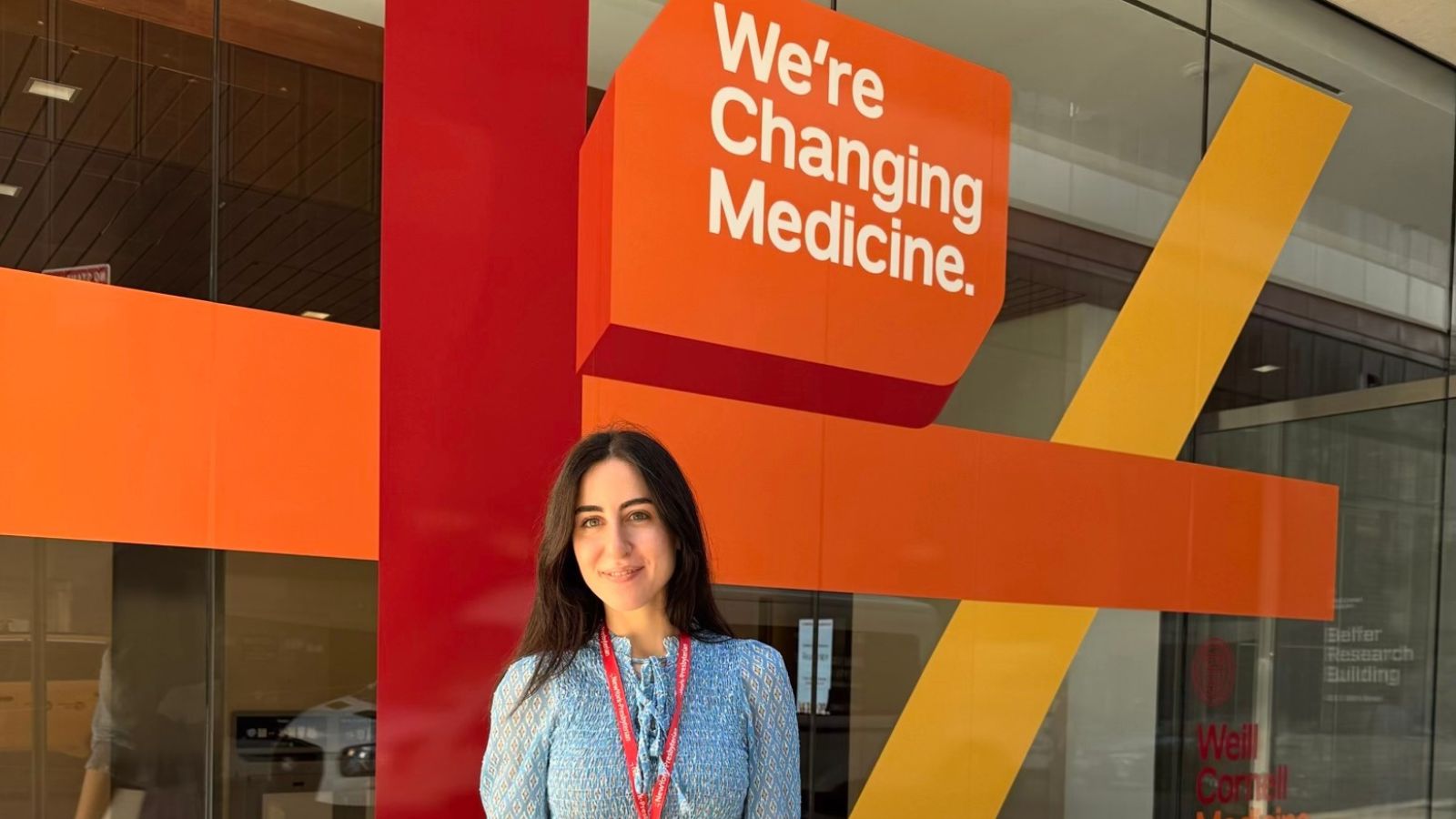
In August and September, thanks to the Virgilio Program and the Fondazione Vollaro, I joined the lab directed by Professor Massimo Loda at Weill Cornell Medicine in New York.
What pushed me has always been the open-minded spirit of the Virgilio Program. I am truly grateful to have been given the opportunity to join a lab whose work lies at the heart of my passion for urology, pursued with my mentors in Italy. Professor Loda is an internationally recognized genitourinary and molecular pathologist whose research has shaped the understanding of prostate cancer, from tumor metabolism to the microenvironment. Being welcomed into his lab was an immense opportunity to give continuity to my passions and to the work I follow in Italy.
I followed my colleagues in every activity, including meetings and seminars in the field with leading research centers such as Memorial Sloan Kettering and Columbia, and was exposed to the most innovative techniques. I was also given the opportunity to focus on two projects in particular.
The first investigates the biological effects of metformin, a widely used antidiabetic drug, on prostate cancer, exploring how it may modulate tumor metabolism directly in patients’ tissue.
The second is a Brigham, Dana-Farber and Weill Cornell study on the cribriform variant, one of the most aggressive forms of prostate cancer. Rather than analyzing bulk tissue, laser-capture microdissection was used to isolate the cribriform component and investigate the immune mechanisms behind its aggressiveness, a highly promising direction for understanding this disease.
Research in the United States showed me a different model: open-mindedness, close collaboration between institutions, synergy among colleagues, and a focus deep enough to reveal what often escapes literature and daily practice, driven by translational integration at its best.
I come home increasingly convinced of the value of the physician-scientist and of the union between clinical practice and research, certain that where collaboration, passion and talent meet, great discoveries happen.
I am deeply grateful to Professor Loda for welcoming me into the Weill Cornell family, and to my colleagues in New York, who guided me throughout. They made me feel part of the team from the very beginning. Heartfelt thanks to the Virgilio Program and the Fondazione Vollaro for this extraordinary opportunity.
This is not the end of an experience, but a new beginning with new horizons.