My lab experience at Traumatic Brain Injury and Neuroprotection Laboratory Mario Negri Institute – Sofia Carmelini
Personal reflections lab rotation
Sofia Carmelini, Virgilio 8° Cohort Student, UNIMIB
Laboratory: Traumatic Brain Injury and Neuroprotection Laboratory
PI: Dr. Elisa R. Zanier
Tutor: Dr. Francesca Pischiutta
Institute: Istituto di Ricerche Farmacologiche Mario Negri IRCCS
In September, I dove into my very first lab rotation at the Mario Negri Institute, joining the Traumatic Brain Injury and Neuroprotection Laboratory under the guidance of Dr. Elisa Zanier and Dr. Francesca Pischiutta. For me, someone used to the more linear, guideline-driven world of clinical rotations, entering a research lab felt like stepping into a new reality where hypotheses replace protocols, discovery replaces certainty and the -80°C freezer becomes both your best friend and recurrent nightmare.
The laboratory’s primary focus is Traumatic Brain Injury (TBI), investigating the pathophysiology of the injured brain and how it interacts with other organs and systemic axes, while exploring innovative therapeutic strategies.
During my rotation, I had the opportunity to follow the two major projects that delineate the lab’s approach to TBI research.
The first project revolves around mesenchymal stromal cells (MSCs) and their neuroprotective potential. Over the years, the team has shown how MSCs (and their secretome) can modulate inflammation and promote recovery after TBI. This work has now culminated in MATRIx, a Phase II clinical trial testing MSC infusions in patients with severe TBI. The ongoing preclinical studies aim to include the complexity and heterogeneity of real patients in the preclinical models, to better support the clinical trial. Some of the patients from this study are now being treated at Papa Giovanni XXIII Hospital. It was especially meaningful to encounter the project during my clinical rotations, after having witnessed its latest developments firsthand in the lab over the summer.
The second research line, the BATMAN project, examines the gut–microbiota–brain axis in TBI. After injury, the gut can undergo structural and functional changes that may exacerbate systemic inflammation and worsen neurological outcomes. BATMAN investigates these interactions, assessing gut barrier function, profiling microbiota and exploring whether targeting the gut could improve brain recovery.
Following both projects side by side gave me a deeper appreciation for the systemic nature of TBI and how diverse scientific strategies can converge toward the same ultimate goal: improving patient care.
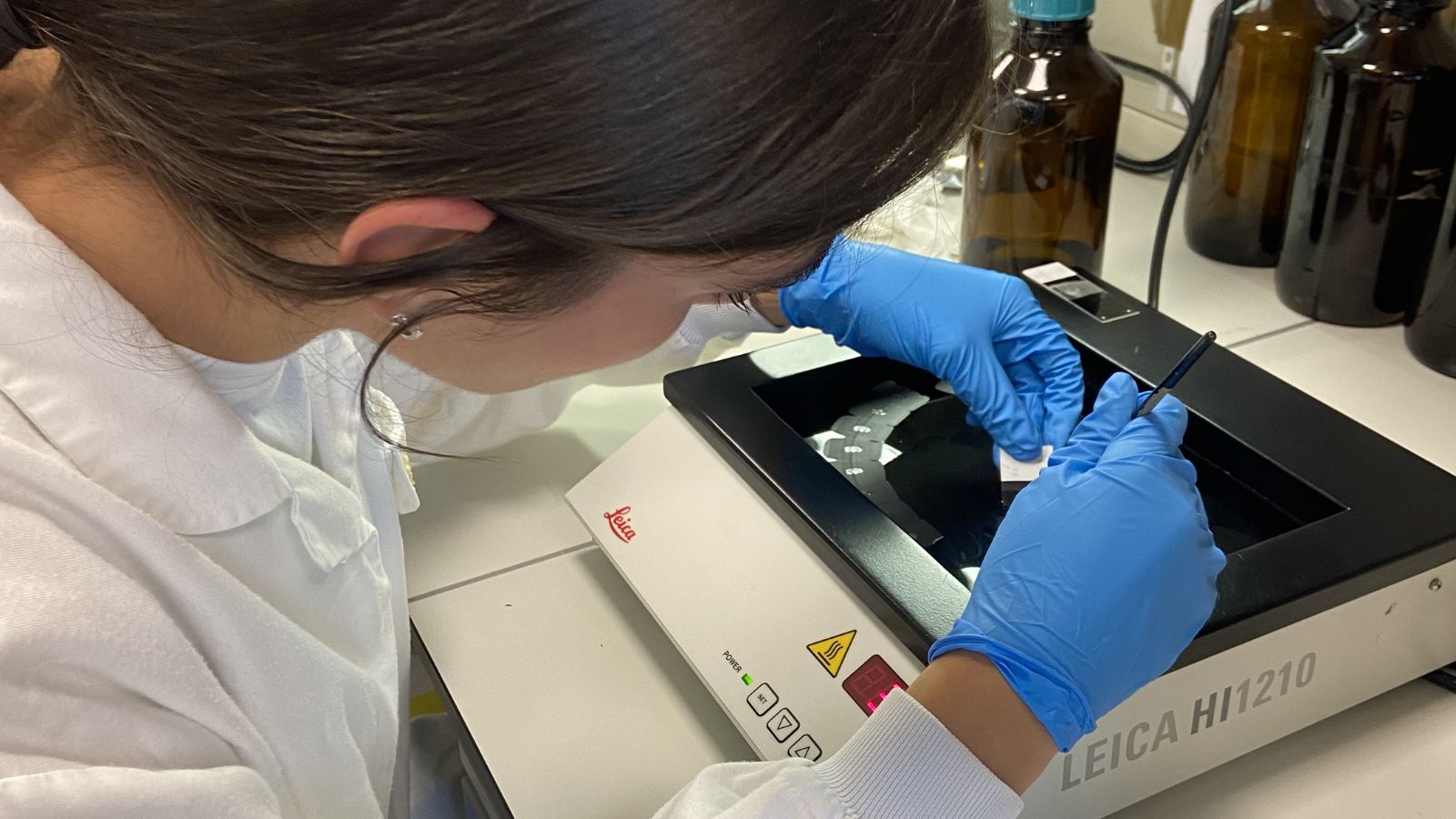
My first experience living the day-to-day life of a researcher has been eye-opening in ways I didn’t expect. The lab is a lively mix of people of different ages, skills, academic backgrounds, and goals. What they all share, fortunately for me, is incredible kindness and patience. They included me in their daily tasks and let me observe and assist in a surprising number of techniques: tissue sectioning, immunohistochemistry, RNA and protein extractions, microbiota-related assays, and yes, more encounters with paraffin blocks and mice intestinal barriers than I ever imagined.
Beyond the technical skills, what struck me most was the rhythm of research. Unlike clinical practice, the lab is not governed by guidelines but by curiosity, willingness to try, and a lot of retrying when it doesn’t work out. Every sample, every gel, every failed PCR contributes, eventually, to a bigger picture which every week, during group meetings, comes to life, connecting everyone’s work into something coherent and meaningful.
After countless samples drawn, many paraffin embedded brains, lots of plasma samples, many encounters with the -80°C fridge I realized I was leaving the lab with far more than technical competence. I’m leaving more curious, more motivated, and more aware of the enormous collaborative effort behind every research advance.
I’m grateful to the team who welcomed, taught, and accompanied me through my first lab rotation. I am especially thankful to Dr. Pischiutta, who has always been available and supportive, and Dr. Zanier who has welcomed me in her lab with great trust and kindness.
If this month taught me anything, it’s that science requires patience, teamwork, and an open mind and that, sometimes, progress starts with simply picking up another sample and trying again.